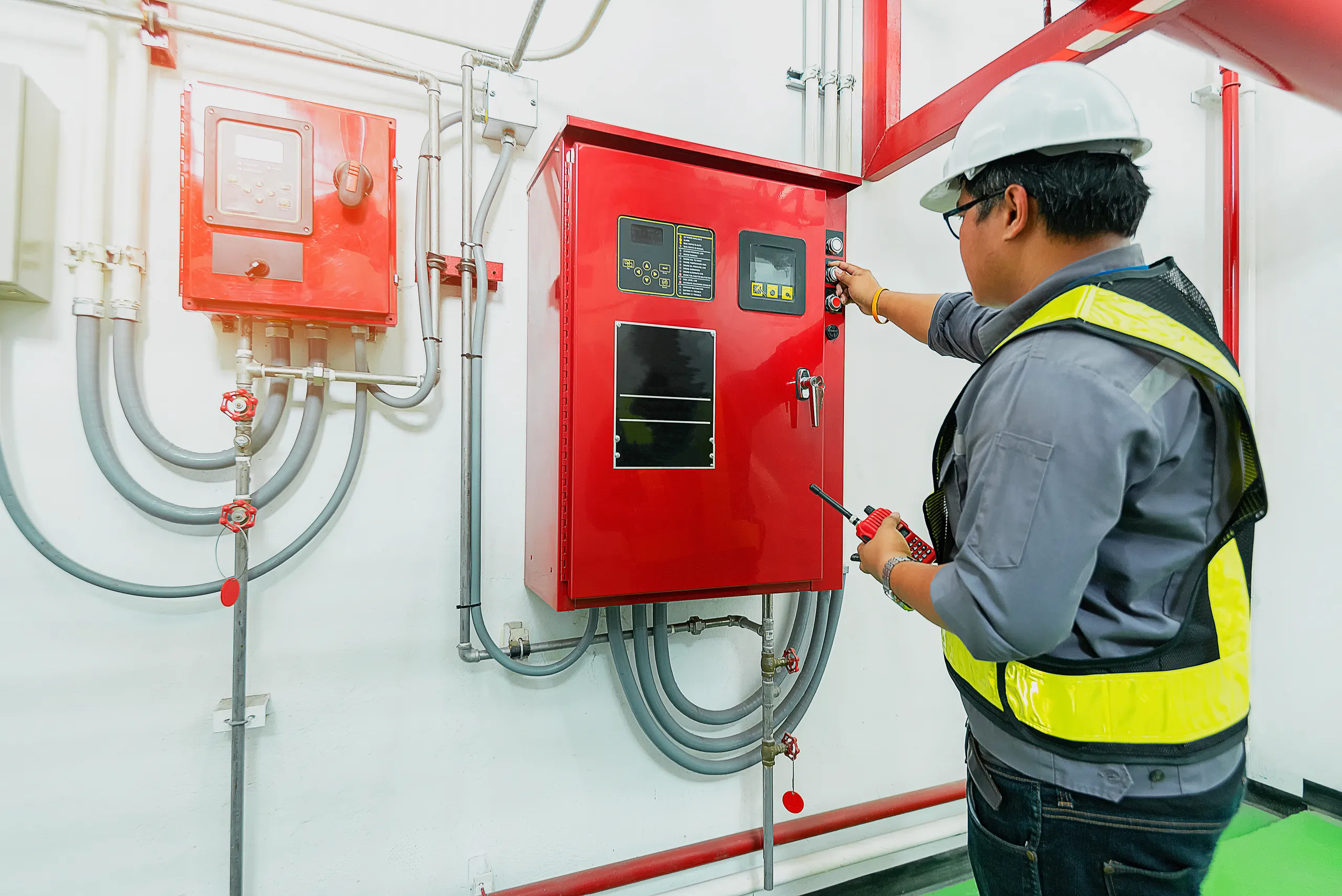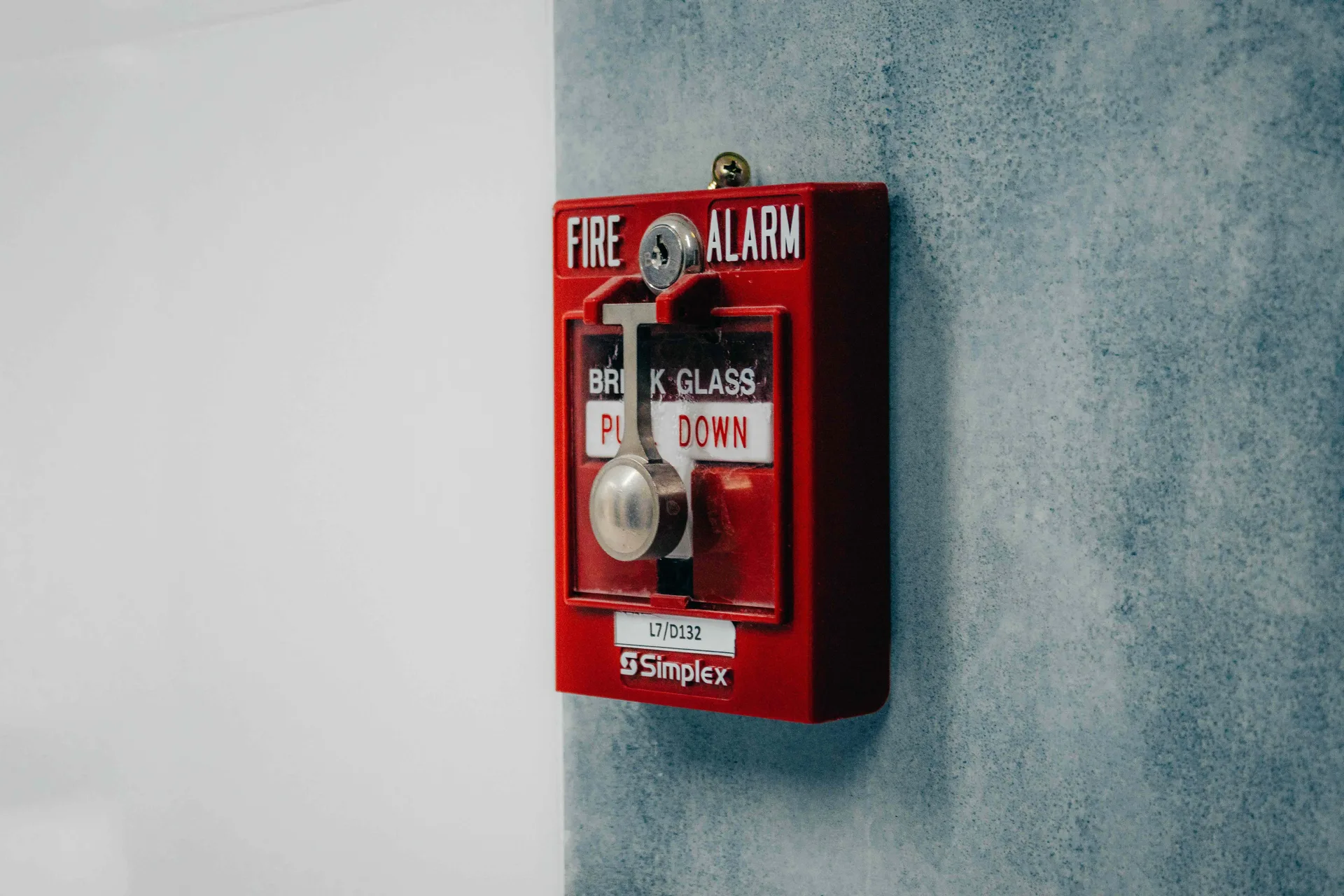
If you manage apartments, the short version is this: your fire alarm system almost certainly has to be monitored, the responsibility sits with ownership and management (not residents), and if the monitoring still runs over dedicated phone lines, you’re probably paying several times more than you should. Most communities we audit are required to have central-station monitoring on every fire alarm panel, plus monitored emergency lines for elevators — and many are still feeding all of it through copper lines that cost more per month than the monitoring itself.
Here’s the longer version, in the order property managers usually ask.
Is fire alarm monitoring actually required at apartment communities?
In most cases, yes. Fire codes adopted across the U.S. generally require fire alarm systems in multifamily occupancies to transmit alarm signals to an approved supervising station — meaning a staffed central station that receives the signal and dispatches the fire department. A bell that rings in the hallway doesn’t satisfy it. Neither does an app.
The specifics — which buildings, which systems, which signals — come from your local code and your fire marshal (the AHJ, “authority having jurisdiction”). Building size, construction era, and renovation history all matter. But the practical rule for managers: if a building has a fire alarm panel, plan on it being monitored, with documentation to prove it. Fire marshals ask for the monitoring certificate and signal records at inspection. Insurance carriers ask sooner.
Who’s responsible — owner, manager, or residents?
The property. Individual smoke alarms inside units are life-safety devices for residents, but the building’s fire alarm system — the panel, pull stations, common-area detection, waterflow switches on the sprinklers — is ownership’s obligation, and management usually carries it day to day. That includes keeping the monitoring active, the account information current, and the response plan up to date. The worst version of this we see: a panel still dialing a monitoring company from two management companies ago, with a contact list of people who no longer exist.
What actually gets monitored
More than the smoke detectors:
- Alarm signals — smoke and heat detection, pull stations, sprinkler waterflow. These dispatch the fire department.
- Supervisory signals — a sprinkler valve someone closed and forgot, low pressure, a duct detector issue. These get your vendor a phone call before the problem matters.
- Trouble signals — power loss, low batteries, and communication failures. A panel that can’t call out is the failure nobody sees until the night it counts, which is why the connection itself is supervised too.
At most communities the same central station also carries the elevator phones (required two-way communication in every cab), pool emergency phones, and gate entry lines. Consolidating those isn’t just tidier — it’s usually where the money is. More on that below.
What does multifamily fire alarm monitoring cost?
Monitoring itself is the cheap part. Cellular fire alarm monitoring typically runs in the range of $75 per month per panel — that’s the actual line item on recent Pulsar conversions, not a teaser rate.
What costs real money is the communication path most older setups still use: dedicated copper phone lines. Fire panels traditionally required two of them, elevators one each, and carriers have priced copper like the dying product it is. On recent property audits we’ve found single elevator lines billed at $400 a month and fire alarm phone lines at $800 for a pair. One community was paying $5,754 a month across its emergency lines and monitoring; after converting everything to supervised cellular, the same coverage cost $577.99. The equipment paid for itself inside the first month.
So the honest cost answer: budget roughly the price of one streaming subscription per panel for the monitoring — then go find out what the phone lines are costing you, because that’s where the surprise lives. Our ResQ Connect program exists specifically to run that audit and conversion for multifamily portfolios.
What to check at your property this week
- Find the monitoring certificate. Which company monitors each panel, and is the account current?
- Check the contact list. Would tonight’s 2 AM call reach someone who still works here?
- Ask what the panels communicate over. If the answer is phone lines, pull the phone bill and sit down first.
- Count the other emergency lines — elevators, pool phones, gates. Same question for each.
- Confirm the paper trail — signal history and inspection records your fire marshal and carrier will want.
If any of those answers come back murky, that’s a fifteen-minute conversation with a fire protection company before it’s a finding at your next inspection.
FAQ
Does every building in a complex need its own monitoring?
Every fire alarm panel needs monitoring, and buildings often have their own panels. Multi-building communities usually consolidate all panels under one monitoring account with per-building identification — one provider, one bill, building-level dispatch detail.
Can we keep our existing fire alarm system and just change the monitoring?
Usually, yes. Most panels connect to a new central station with a cellular communicator — the system stays, the phone lines go, and the monitoring account moves. Contact us with the panel details and we'll confirm.
Is cellular monitoring code-compliant for fire alarms?
Yes — supervised cellular is a recognized communication path under modern fire alarm standards, and it reports its own failures, which copper never did. Your AHJ has final say on any system change; we handle that coordination as part of a conversion.
What happens when an alarm comes in from our property?
The panel signals the central station within seconds. Operators dispatch the fire department for alarm signals, and for supervisory or trouble signals they notify your management contacts and vendor per the response plan on file.
Do pool phones and elevator phones need to be monitored too?
Elevator cabs require working two-way communication, and many jurisdictions require pool emergency phones at multifamily amenities. Both are typically monitored lines — and both convert to cellular the same way the fire panels do. See our Security & Pool Phone Monitoring page.
Pulsar Alarm Systems monitors fire alarm, security, elevator, and pool lines for multifamily communities nationwide — including NMHC Top 50 portfolios — from our UL-listed central station, since 1974. Start with a free line audit: we’ll tell you what’s monitored, what isn’t, and what the phone lines are really costing. Get a Free Assessment or see our multifamily solutions and fire alarm monitoring services.