Most people in a commercial building never think about the fire alarm system until it activates. The red boxes on the wall, the horns near the ceiling, the panel in the electrical room—each is one link in a chain that runs from the moment a fire is detected to the moment help is dispatched. Understanding how that chain works makes it easier to see why code requires what it does, and why a failure at any point in the chain matters.
The Signal Path
Every commercial fire alarm system, regardless of size, does the same four things in the same order: it detects, it decides, it notifies, and it transmits. A system in a small retail suite and a system in a high-rise differ in scale and sophistication, not in sequence.
Initiating Devices
Initiating devices are the inputs. They are what tells the system something is wrong, and they fall into two categories: automatic and manual.
Automatic devices detect a fire without anyone present:
- Smoke detectors sense combustion products, typically by photoelectric or ionization methods
- Heat detectors respond to a fixed temperature threshold or to an unusually fast rate of temperature rise
- Duct detectors sit in the air handling system and shut down fans so smoke isn’t distributed through the building
- Waterflow switches sense water moving in a sprinkler pipe, which means a sprinkler head has activated
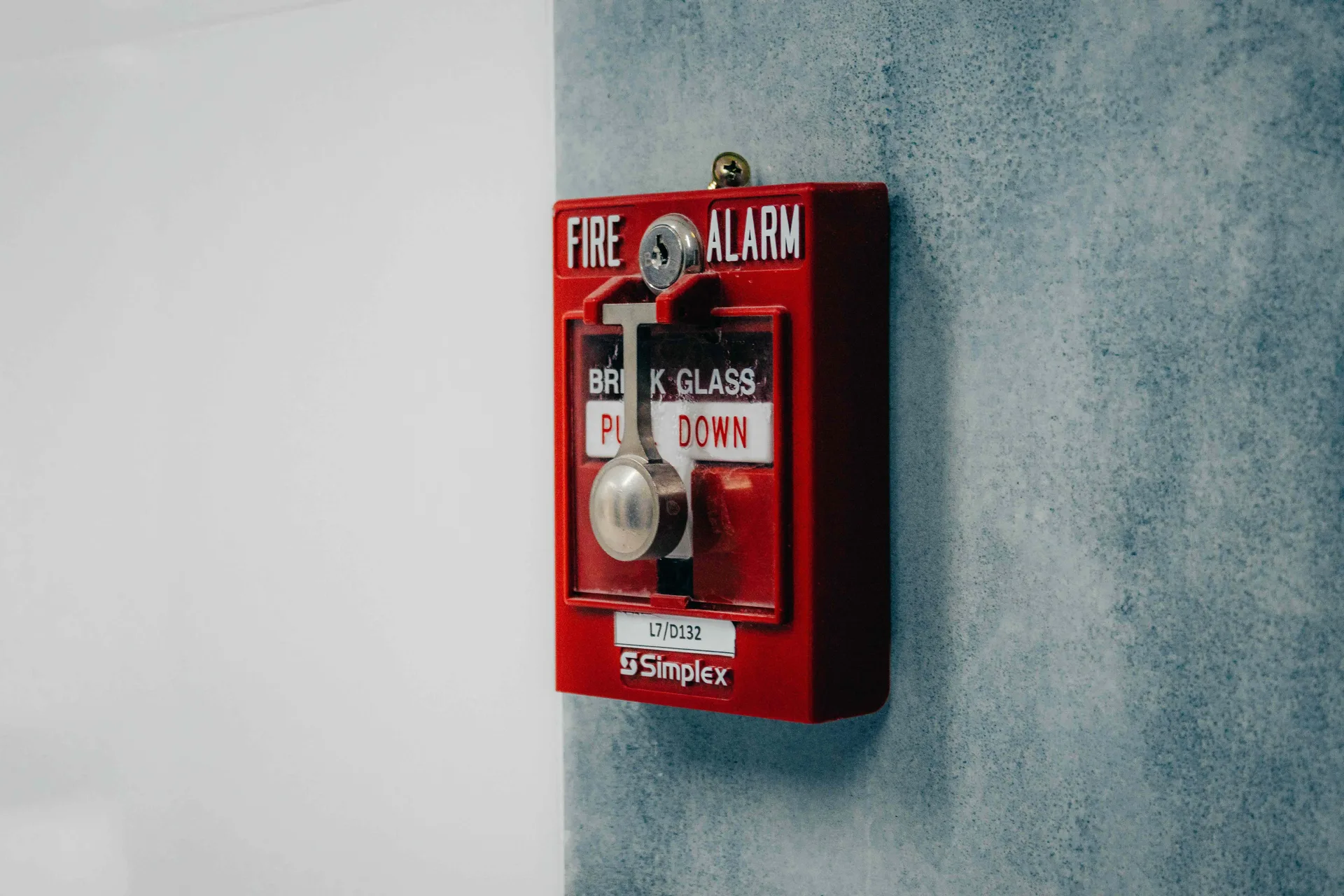
Manual devices require a person. That means pull stations.
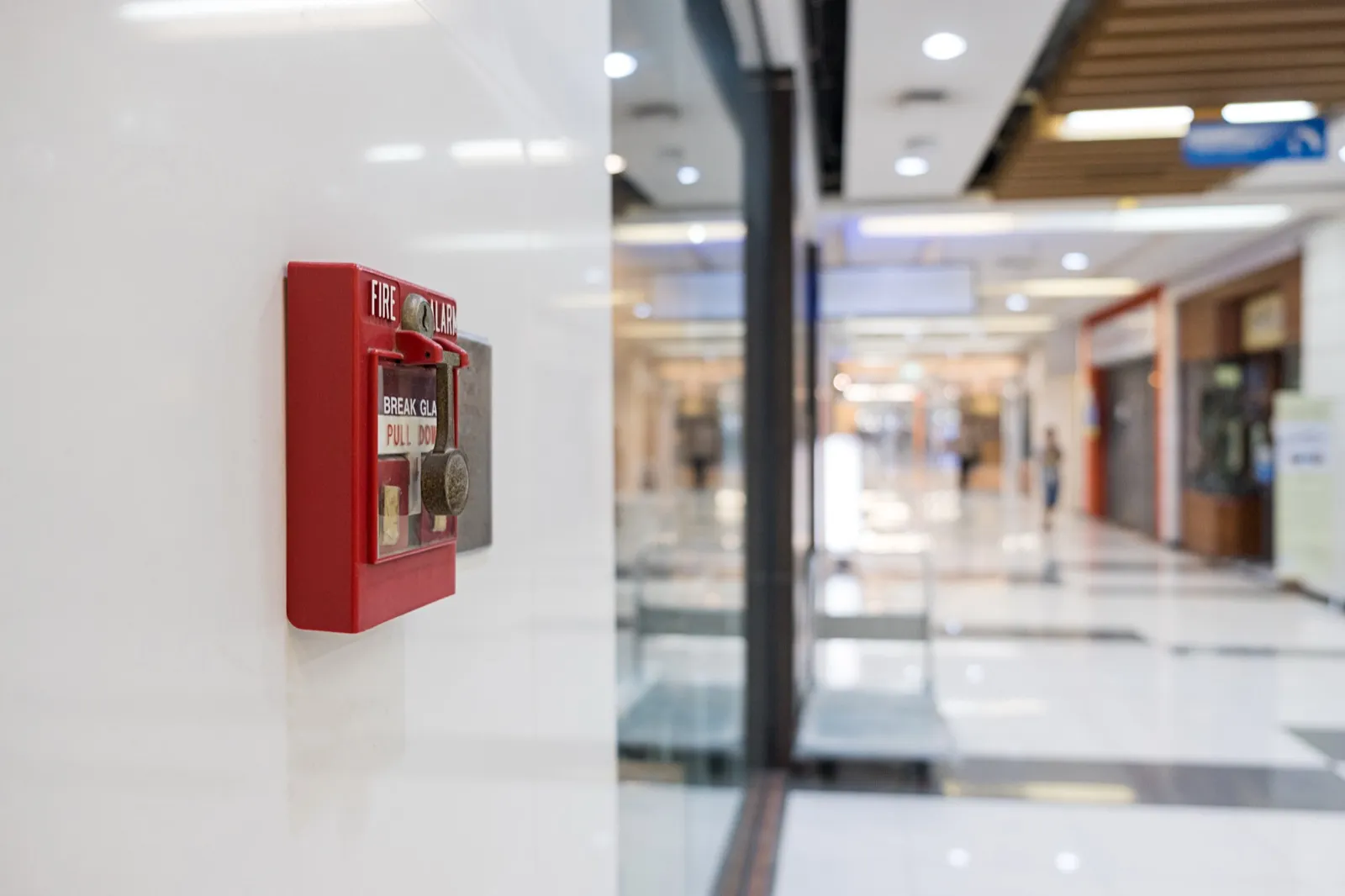
Pull stations exist because a person often knows about a fire before a detector does. Someone who sees flames in a stairwell shouldn’t have to wait for smoke to reach a ceiling-mounted device. Code addresses this by placing pull stations along the paths people already use to leave—near exits, at stairwell doors, on each floor—and by limiting how far someone has to travel to reach one.
You will see two designs in the field. Single-action stations activate with one motion. Dual-action stations require two, usually lifting a cover before pulling the handle, which reduces accidental and malicious activations in publicly accessible spaces.
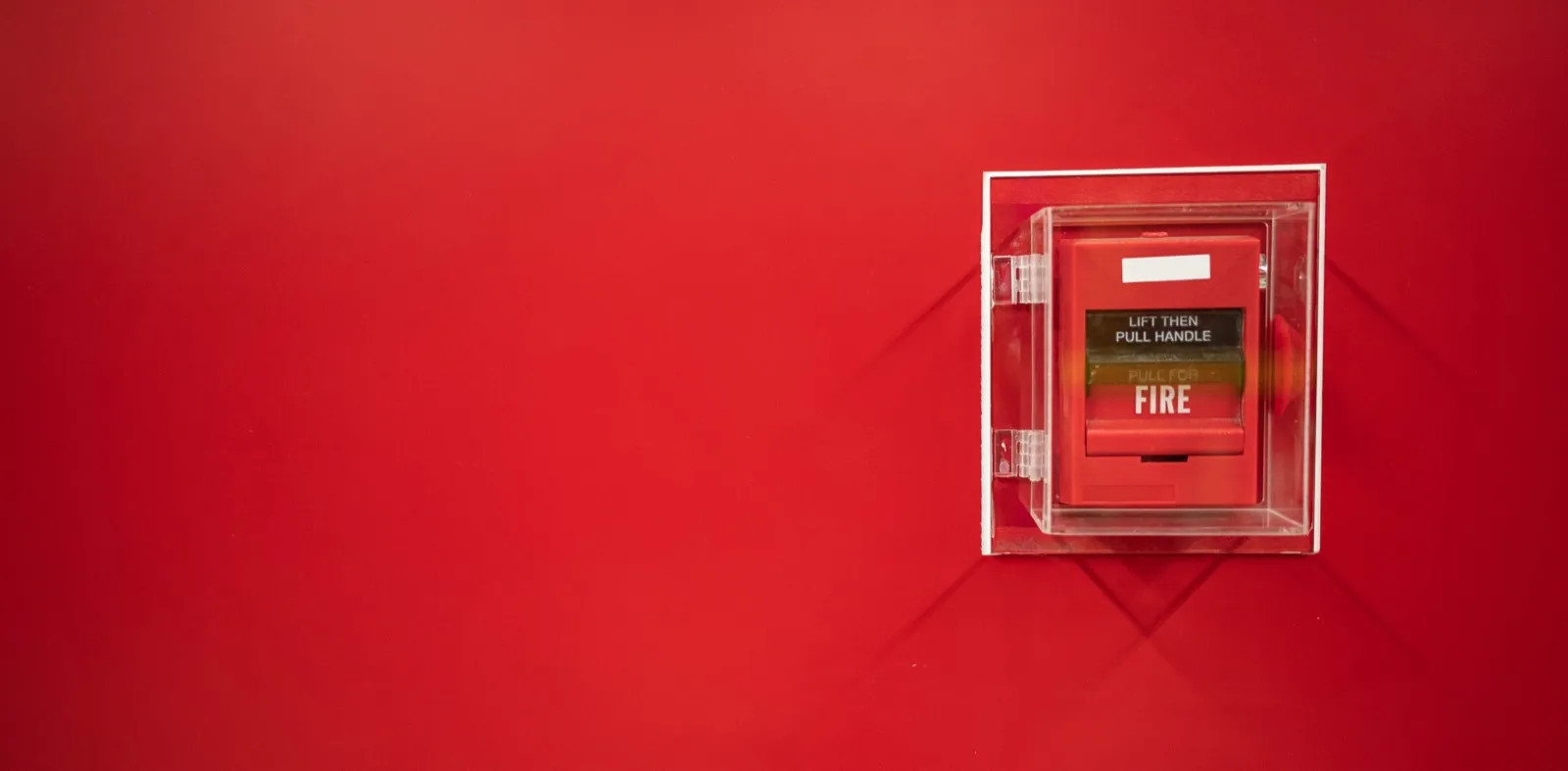
Some stations add a hinged protective cover on top of that. The cover sounds a local warning tone when lifted, which is often enough to discourage a false pull without slowing down anyone with a genuine reason to use it.
The Fire Alarm Control Panel
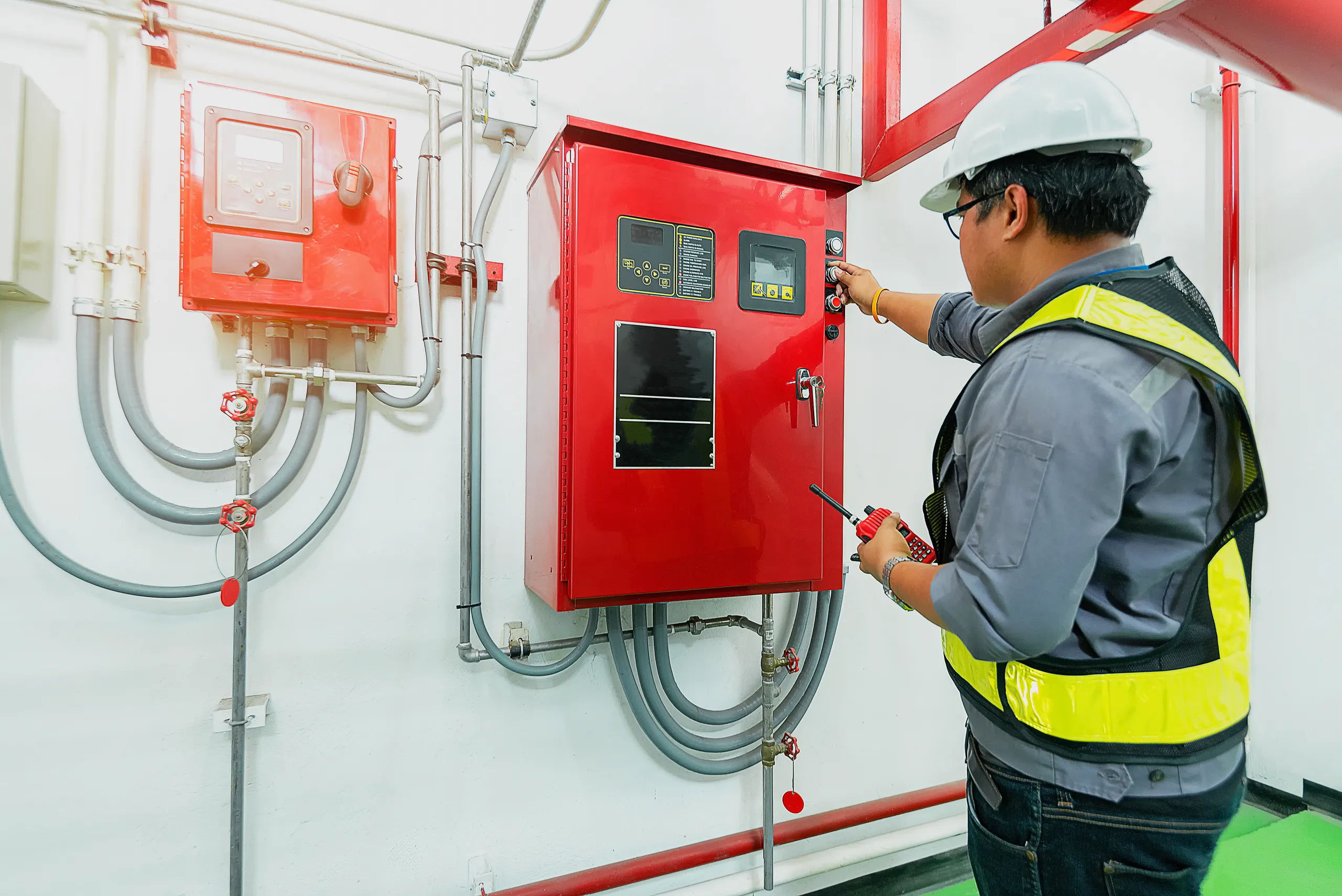
The panel is where the decision happens. It continuously monitors every device and every wire connected to it, and when an initiating device activates, the panel determines what the building should do about it.
How precisely it can answer that question depends on the system type:
- Conventional systems divide the building into zones. When a device activates, the panel reports the zone—a floor, a wing, a tenant space—and responders narrow it down from there.
- Addressable systems assign every device a unique address. The panel reports the specific device and its location, so responders go directly to the source rather than searching a zone.
Addressable systems also make it practical to identify a single dirty or failing detector out of hundreds, which matters more for maintenance than most building owners expect.
Notification Appliances
Once the panel decides there is an alarm, it drives the outputs: horns, strobes, chimes, and in larger or more complex buildings, speakers carrying recorded or live voice instructions.
The audible signal is standardized. A repeating three-pulse pattern, called Temporal Code 3, is the recognized evacuation signal in North America, so it means the same thing in an office building as it does in a school. Strobes are synchronized so people with hearing loss get the same message, and so that competing flash rates don’t create a hazard of their own.
Voice evacuation systems are common in buildings where a full simultaneous evacuation is not the right response. A hospital, a high-rise, or a large arena may need to move some occupants while holding others in place, and a horn cannot communicate that distinction.
Transmission and Dispatch
The last link takes the alarm off the property. The panel transmits the signal to a supervising station, where operators receive it, confirm what type of signal it is and where it originated, and notify the fire department.
This is the step that continues working when the building is empty. A detector activating at two in the morning in a closed facility produces the same dispatch as one activating at midday, because the transmission path does not depend on anyone being present to hear the horns.
What Keeps the System Trustworthy
A fire alarm system is only useful if it is working at the moment it is needed, and a system that has quietly failed looks exactly like a system that has had nothing to report. Three things close that gap.
Supervision. The panel monitors its own circuits, not just its devices. An open circuit, a short, a ground fault, a disconnected detector, or a low battery generates a trouble signal—a distinct condition from an alarm, with its own audible indication at the panel. Silence is never assumed to mean everything is fine.
Secondary power. Fire alarm systems carry battery backup sized to keep the system in standby for a defined period after a power loss and still have capacity to run notification appliances in alarm. Batteries age, which is why their condition is part of routine testing rather than something checked once at installation.
Periodic inspection and testing. NFPA 72 sets schedules for what gets inspected and tested and how often, with different intervals for different components. Testing verifies that devices still activate, that the panel still processes and reports correctly, and that the signal still reaches the supervising station—the whole chain, not just the parts that are easy to reach.
Where Systems Commonly Fall Short
In existing buildings, problems tend to cluster in a few predictable places:
- Renovations that moved walls without moving the devices those walls affect, leaving detectors or notification appliances in the wrong locations for the new layout
- Panels old enough that replacement parts are no longer manufactured, so a single board failure takes the system out of service
- Devices disabled after repeated false alarms and never restored
- Changes in how a space is used—a storage area converted to occupied space, for example—that alter what the code requires without anyone revisiting the system design
None of these announce themselves. They surface during an inspection, or during an actual fire.
Next Steps
If you are responsible for a commercial property and cannot say when the fire alarm system was last tested, what type of panel it uses, or whether the transmission path to the supervising station has been verified, those are the questions worth answering first.
A licensed fire protection company can evaluate the existing system, document its condition, and identify what code requires for the building as it is used today. Contact Pulsar to arrange an assessment, or read more about our fire protection services.